Flickering Lights in Your Leichhardt Home
One light flickering on its own is usually a loose bulb or a tired dimmer switch, nothing more. Flickering across several rooms, or flickering with no obvious trigger, is a different animal entirely.
Scope is the first thing to check: single fitting, single room, or the whole place at once.
Catch a whiff of anything scorched, or see actual sparking, and that's your cue to stop and call (02) 9134 9026 now.
Flickering Lights, Explained in Plain English
Light output tracks voltage almost exactly. Drop the voltage reaching a globe even briefly and the eye picks up the dip as a flicker, long before it's enough to matter for anything else plugged in.
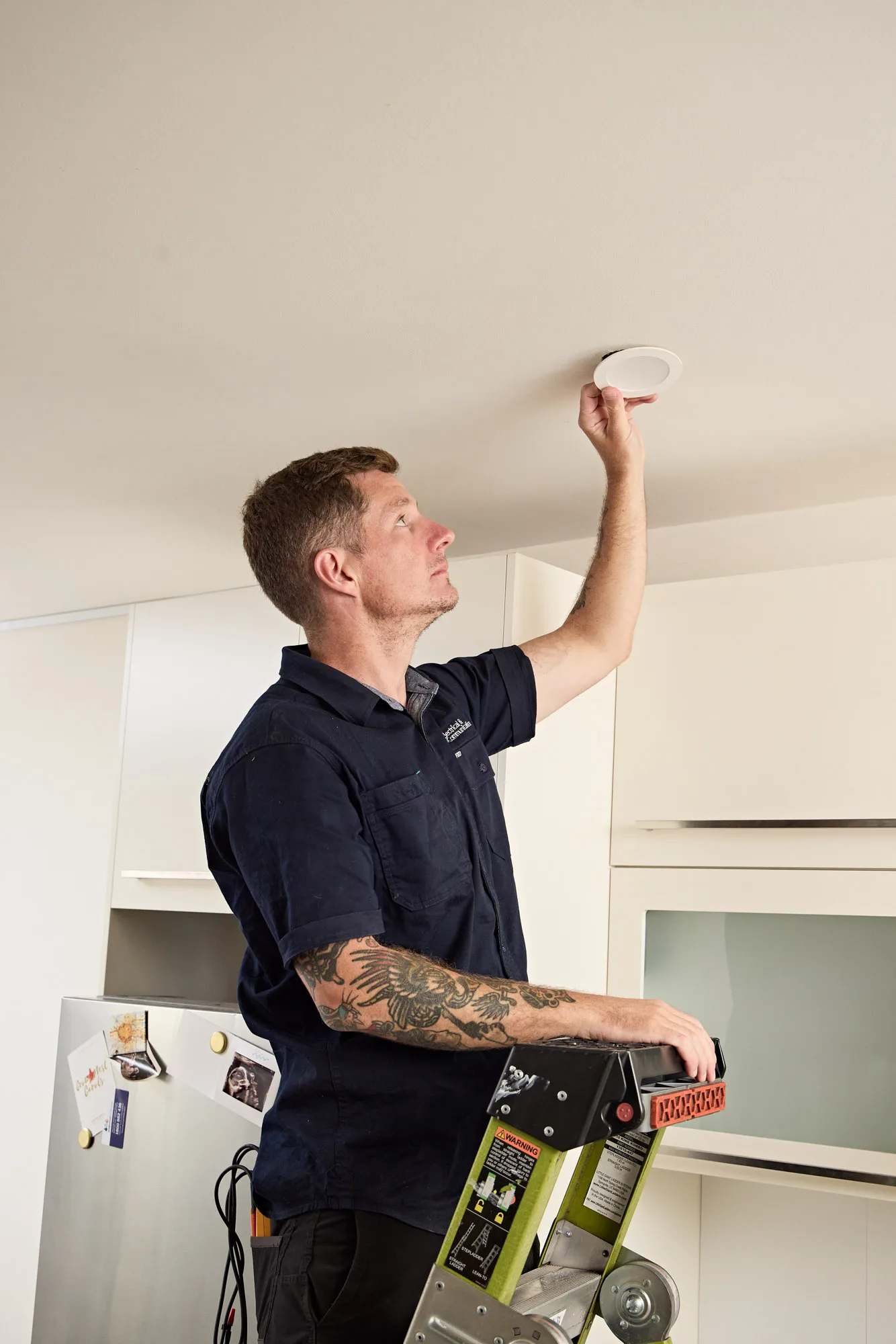
At the fitting itself, a loose globe, a tired switch or a dying LED driver can cause that momentary voltage sag on its own, with nothing else on the circuit involved.
Further back, a heavy appliance cycling on the same circuit briefly pulls the shared voltage down for everything else on that run, lights included.
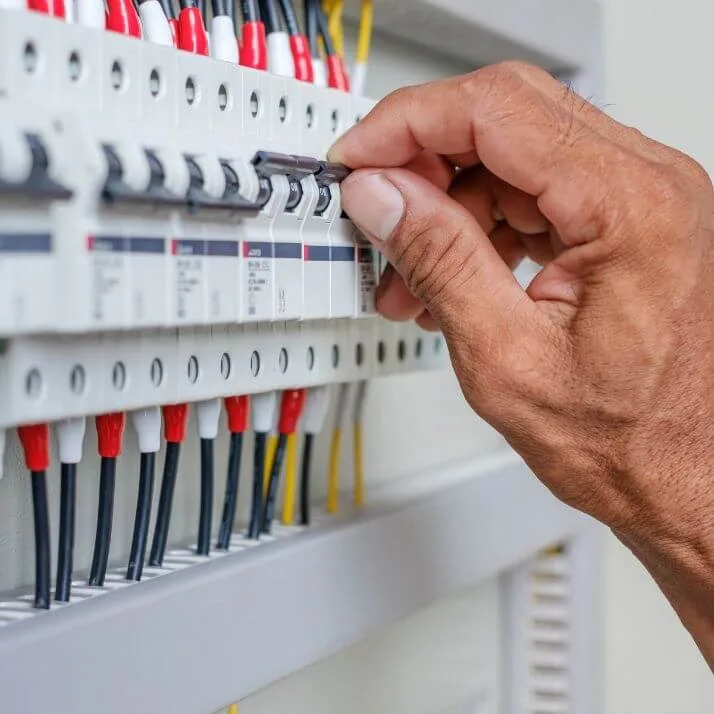
Furthest back and most serious, a terminal at the switchboard that's no longer gripping properly can starve several circuits at once, and the flicker it causes tends to worsen rather than settle.
Where the drop originates decides how far the fault has spread: contained to one fitting, tracking one circuit, or showing up across the whole house.

The Most Likely Causes
Start with the simple explanation and only rule it out before moving on:
- A loose globe or faulty fitting. The plainest explanation, worth checking before anything else.
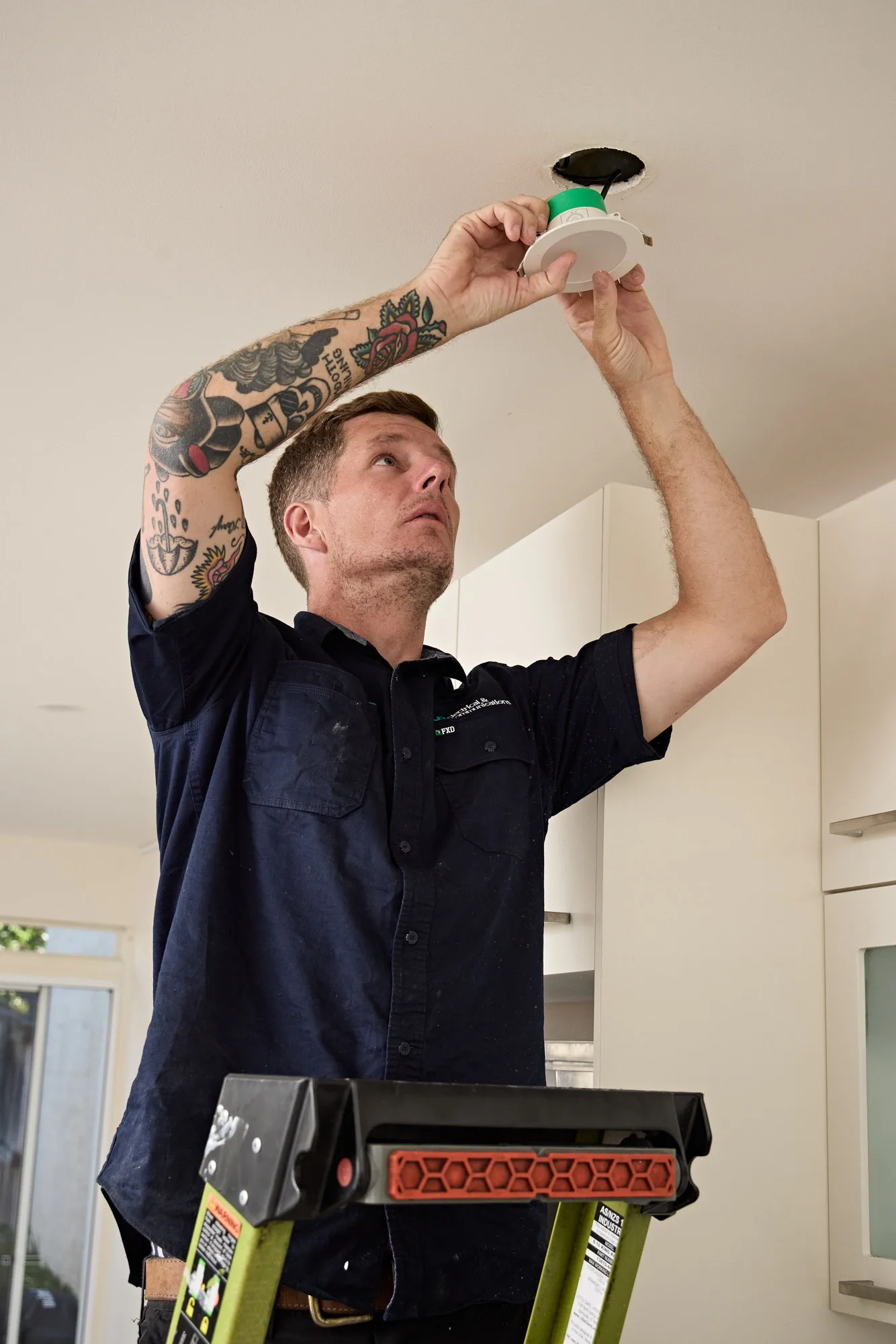
- A failing LED driver or dimmer. Cheaper drivers are common failure points in modern LED fittings.
- A shared circuit with a heavy appliance. Something else drawing a surge of current dips voltage briefly.
- A terminal that's worked itself loose over time at the switch. Creates an intermittent break in the circuit.
- An ageing or damaged switchboard connection. More serious, and the one to rule out if flickering spreads across rooms.
- Voltage fluctuation from the street supply. Rare, and outside your switchboard if it's genuinely happening network-side.
When a Flickering Lights Is Urgent
One globe flickering on its own, nothing else going on, sits at the bottom of the priority list and a standard booking suits it fine.
Flickering that spreads to multiple rooms or gets worse over days is a different matter, since that pattern usually points to a loose connection that's still degrading.
Any flickering paired with a burning smell, warm switches or visible sparking is urgent, full stop. Don't wait on that combination.
Lights that dim noticeably whenever a large appliance starts, then recover, are usually a load issue rather than an emergency, though it's still worth a booking if it happens often.
Flickering that only shows up during storms or heavy rain deserves a mention on the call too, since damp can affect an already marginal connection outdoors or in a roof space.
What To Do Right Now
- Work out the scope before you call. Say whether it's one bulb, one room, or everywhere, and whether it tracks an appliance turning on.
- Swap the globe first if only one fitting is doing it. That rules out the cheapest cause in thirty seconds.
- Don't handle a switch or fitting once it's warm to touch. Kill that circuit at the board and ring us.
- Book it in once it's past a single stray flicker, sooner again if it's spreading room to room.
How We Fix and Certify the Repair
We start from the pattern you describe on the phone, since knowing whether it's one globe or the whole house already narrows down where to look.
On site, the specific circuit, switch and fitting get tested properly rather than parts swapped on a hunch.
A thermal camera comes out whenever the switchboard itself looks like the more likely culprit rather than a simple worn-out fitting.
The fix itself ranges from a five-minute driver swap to re-terminating a connection at the board. Notifiable work gets a Certificate of Compliance to AS/NZS 3000 once it's done.
The Leichhardt Pattern We Keep Seeing
Balmain Road carries a mix of older terraces and renovated homes as it runs through Leichhardt, and that mix shows up in the flickering calls we get from the street.
Homes that have had lighting upgraded to LED without touching the original switches often flicker at the dimmer, since older mechanical dimmers weren't designed for LED loads.
It's a mismatch problem more than a fault, and one worth mentioning if your own lighting has been progressively swapped to LED over separate projects rather than done as one job.
Keeping It From Coming Back
Stopping the repeat call usually comes down to one of these:
- Matching dimmers to LED loads, since older dimmer switches often aren't rated for modern LED fittings.
- Keeping lighting circuits separate from heavy appliance load wherever the existing wiring allows it.
- Getting the board itself checked for ageing or loose connections. Worth pairing with a full switchboard upgrade if it's due one anyway.
- Replacing cheap LED drivers with better-quality gear that holds a steadier output over time.
Servicing Leichhardt and Nearby Suburbs
Flickering that turns into a total blackout on the same circuit is really a power outage at that point, worth reading about separately. And if the breaker itself is cutting out rather than the light just dimming, our page on a circuit that keeps dropping covers that instead.
We take in Haberfield, Annandale and Petersham on our normal run too, so getting someone out doesn't usually mean a long wait.

Book an Electrician Today
Flickering beyond one tired globe deserves a proper look before it turns into something bigger. Describe the pattern when you call (02) 9134 9026, and we'll take it from there.
Common questions
Leichhardt Flickering Lights FAQs
What people usually want to know once they notice lights doing this.
Why do the lights only dim when the oven or the aircon kicks in?
Big appliances draw a burst of current the moment they switch on, and that brief surge dips voltage on anything else sharing the circuit. It's a load pattern, not a fault in the light fitting.
What kind of money are we talking about?
A dud globe or a tired dimmer is cheap to sort. Chasing a loose connection back through a circuit or the switchboard costs more, and either way you'll see the number before we start.
Do I get anything in writing for the fix?
For notifiable work, yes, a Certificate of Compliance goes to NSW Fair Trading and you keep a copy showing the job meets AS/NZS 3000.
Is it one light or the whole house?
That's the key question we'll ask first. One fitting misbehaving points at that fitting. Flickering everywhere regardless of what's switched on points further back, toward the wiring or the board.
How do you actually locate a loose connection?
We test the circuit, the switch and the fitting individually, then bring in a thermal camera if a connection issue looks more likely than a simple dud globe.
Do I need to cut power at the mains while I wait for you?
Not for ordinary flickering. Only pull the mains if you notice a burning smell or actual sparking alongside it.